Historic architecture across The Fan District, Museum District, and Church Hill features aging heart pine and structural framing vulnerable to wood-destroying insect activity. Carpenter ants do not consume wood but…
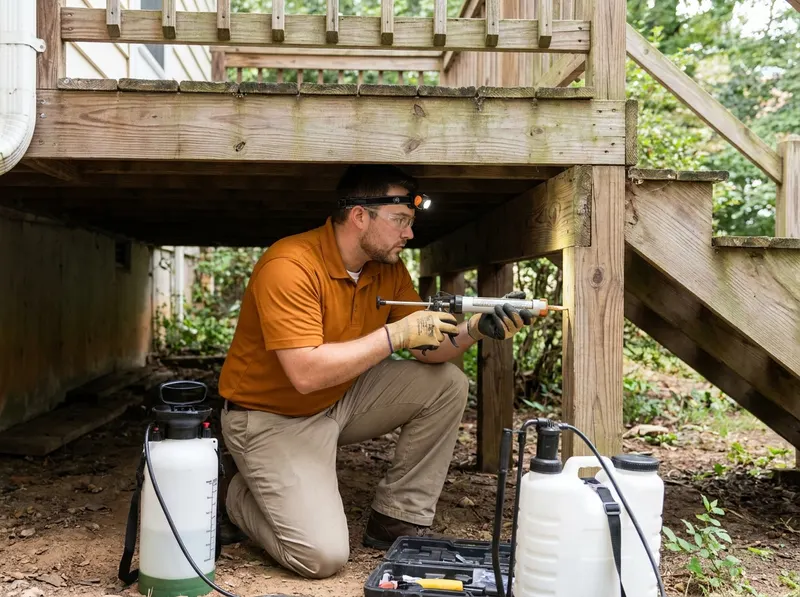
Historic architecture across The Fan District, Museum District, and Church Hill features aging heart pine and structural framing vulnerable to wood-destroying insect activity. Carpenter ants do not consume wood but hollow out moist structural members to excavate nesting galleries, depositing fine sawdust-like frass near baseboards and window aprons. Wood-boring beetles, including powderpost and old house borer species common near the humid lowlands of Woodland Heights and Shockoe Slip, deposit larvae that feed internally on timber cellulose for years before creating pinhole exit marks.
Remediation relies on direct root-colony eradication rather than broad surface pesticide applications. Technicians locate satellite and parent nests behind plaster, drywall, and crawlspace subfloors, applying targeted non-repellent materials and borate timber infusions that transfer throughout the entire colony network. Every treatment protocol uses botanical or pet-friendly compound placements inside enclosed structural cavities, protecting indoor dogs, cats, and toddlers from topical exposure.
Property managers in Carytown and Scott's Addition often face a choice between broad-spray exterminator contracts and surgical timber remediation. Broad surface sprays only kill visible foraging workers, leaving primary queens and subterranean beetle larvae insulated inside structural framing. Precision remediation neutralizes parent colonies directly inside the wood substrate, eliminating ongoing structural damage while bypassing expensive, forced multi-year maintenance agreements.
Every job gets a firm, written price after a free on-site visit.
Tell us about your carpenter ant and wood-boring beetle remediation job in Richmond and we'll send a clear, written quote — usually the same day.
 Deltaro Pest Solutions